
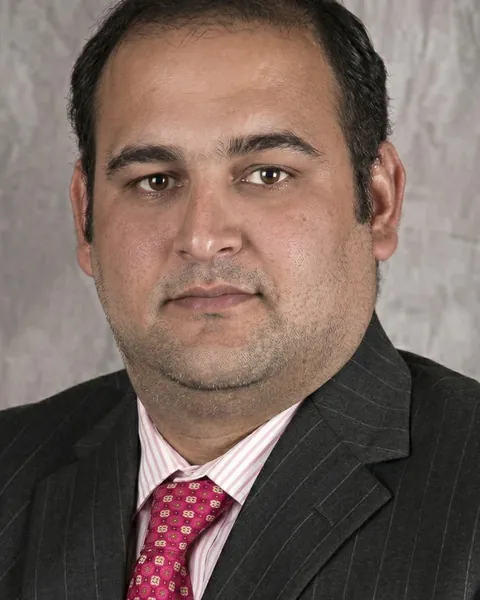
Before
Before any of this, I was a Marine. In the Marines I was military police.
There is a saying in the Marine Corps: “Inspect, don’t Expect.” I put it in my first book, in the part about checking your lawyer’s work. You can’t just sit on the sidelines and expect your case to go smoothly.
The morning they came
I was half asleep, so the timing is foggy. Somewhere around five-thirty, maybe five-forty in the morning, my dog Bear started barking.
Bear never barked. Ever. He would sit there, stare at me, and wait for me to wake up. It didn’t matter if I woke up at nine o’clock in the morning or two o’clock in the afternoon, he would never bother me. That morning he was going nuts like a tornado was coming. I told him to shut up. Then I went to the back door and let him out, and he took off like a missile. I figured there was some bird out there he was freaking out over.
He knew. I didn’t. The agents were surely already outside.
I was sick. I’d taken cough medicine, so I went back to the couch. Then, at six, the pounding. “Police! Open up!” Louder every time. I stumbled to the door. My eyes hadn’t even focused. I opened it to rifles, at least three of them, and men in masks. One of them pinned me to a wall. Cuffs. Into a patrol car.
Nobody warned me. Search warrants are secret, and there is almost never a warning before the door.
Sitting in that patrol car, I thought to myself, man, Bear probably thinks he did something wrong. I wasn’t there anymore. I haven’t seen him since.
My sister and friends were the ones who cleaned up my house.
Bear never barked. Ever.
The four words I didn’t say
Here is the part I have to own. I knew all of this. I was a military policeman. I told people for years, never talk to the cops. But when I was in that situation, I thought I could make it better. I talked.
I confessed. I was sentenced to 20 years. Another guy with almost the same case kept his mouth shut and asked for a lawyer. He got seven.
They tell you anything you say can be used against you. They leave out the other half: once you say you want a lawyer, the questions about the case have to stop.1 I never got the chance to ask if I was free to leave. I was in cuffs before I was awake. That’s why four words matter more than anything else on this site: I want a lawyer.
If agents are at the house right now, the Right now page has the exact words and the rest of the first hour.
I was in cuffs before I was awake.
The first court date
When I was brought into court for my initial appearance, I was about ready to fall over from a heart attack. I didn’t have the foggiest idea of what was about to happen. I felt humiliated that my parents would see me shackled and wearing an ugly green jumpsuit.
By the end of the hearing, I left feeling like nothing happened. That is what you should feel. If someone you love has a first court date coming, go if you can, and sit where they can see you.
My family is always there and always supportive. They stuck by me through everything, even those frantic phone calls where I was scared to death and pushed them to their emotional limits.
What county jail taught me
I waived my preliminary hearing in federal court and I regretted it. My attorney came to me and said that he “made a deal” with the prosecutor that if I waived the preliminary hearing, he would get access to the discovery faster. The only “discovery” turned over was the search warrant, which I already had, and an inventory list of items seized. That’s it. In fact, this is one of the primary reasons I even decided to write my first book.
I was railroaded at my arraignment, and I spent years trying to go back to it and correct the error. I didn’t speak up in the courtroom, and every argument I made about it afterward failed because of that.
In jail, the prosecution turned over CDs of my recorded phone calls. Over 100 of those calls were attorney calls, and each and every one of them was reviewed by a federal agent. We objected and the judge didn’t really care. Another inmate I didn’t know from a hole in the wall got into my attorney letters and called the prosecution. It didn’t matter that 90% of what he said was completely false.
Throughout my federal case I waived my speedy trial rights routinely and had no idea the benefit of pursuing a speedy trial. And I regret it. My lawyers kept saying the prosecutor would give me a deal. The delays just gave the government time to put a wired snitch into my cell.
Even an innocent act can be twisted. Because of the case, I had to close my business, and my clients needed their files. I gave my password so they could get them. Nothing was deleted. The government called it obstruction anyway, and the enhancement applied. I fought it tooth and nail.
Nothing was deleted.
Inside
Inside, I taught federal law classes to fellow inmates and helped hundreds of people with BOP administrative remedies, post-conviction issues and the other legal problems people face in prison.
I have helped hundreds of federal prisoners with their 2255 motions, the one shot most people get to challenge a federal sentence after it is final. That work, along with compassionate release and retroactive guideline amendments, has secured over 60 years in sentence reductions.
In county jail, a 19-year-old kid ended up in there after being arrested for possession of marijuana. The police report said the drugs were in “plain view” on the floorboard by the driver’s door. I thought about it, and there were only two ways the officer could have seen it: if the door was open, or if the officer put her head through the window. He told me she put her head through the window. We filed a motion to suppress immediately. The judge got him a lawyer, a hearing happened, and the case was tossed.
The Prisoner’s Self Help Litigation Manual taught me my rights, and I used it to successfully sue a jail or two. I have helped a number of people prepare their allocutions, the statement you make to the judge at sentencing. The most successful are the ones that truly come from the heart.
I also litigated my own 2255 motion. It was not successful, but the effort was invaluable. It compelled the government to respond and handle an appeal, a challenge they were not pleased to face.
Why I wrote the books
Ever since I faced the federal gauntlet, I have wanted to get information to everyone so we can level the playing field a little. Prosecutors use knowledge as their weapon of choice. The only way to level the playing field is to learn your rights and enough criminal procedure to not be lost.
I started Surviving Pretrial in county jail and finished it in prison. The 2255 Motion Handbook came after, to fill a gap: a step-by-step guide for regular prisoners filing a 2255 motion without a lawyer.
This site is the next step. Everything someone needs in a crisis is here, free, written to be printed and mailed to someone who has no internet. The books are there for anyone who wants the whole thing in one place.
There is nothing cooler than watching a prosecutor find out they are arguing a case against a defendant who knows his rights.
Set for Sentencing
I was a guest on Set for Sentencing, the podcast hosted by Doug Passon.
So you know exactly where I stand: Doug is a lawyer and a documentary filmmaker, and he has been my friend, mentor and lawyer through some of the toughest times I have ever faced. He made my sentencing video.
For the video, I sent Doug a mini-autobiography detailing several aspects of my life that I thought could be relevant. Doug, using his many powers of persuasion, convinced the jail I was at to let me wear a button-down shirt for the video. He also taught me the importance of humanization in advocacy.
I built this from that place. Free. Because you deserve what I didn’t have.
The two books, and which one you need
This is educational information from a paralegal, not legal advice. Every case is different. Talk to a lawyer about yours.
§ Sources
- Edwards v. Arizona, 451 U.S. 477, 484–85 (1981) (once a person in custody asks for a lawyer, questioning stops until a lawyer is there, unless the person starts talking again). Back