This site is always being improved. Check back regularly for new tools, guides, and updates.Updated regularly. Check back often.
Surviving the Feds Series

Books that hand you the map.

Written by Bilal Khan — not from a law library, but from inside the system. Available in paperback.

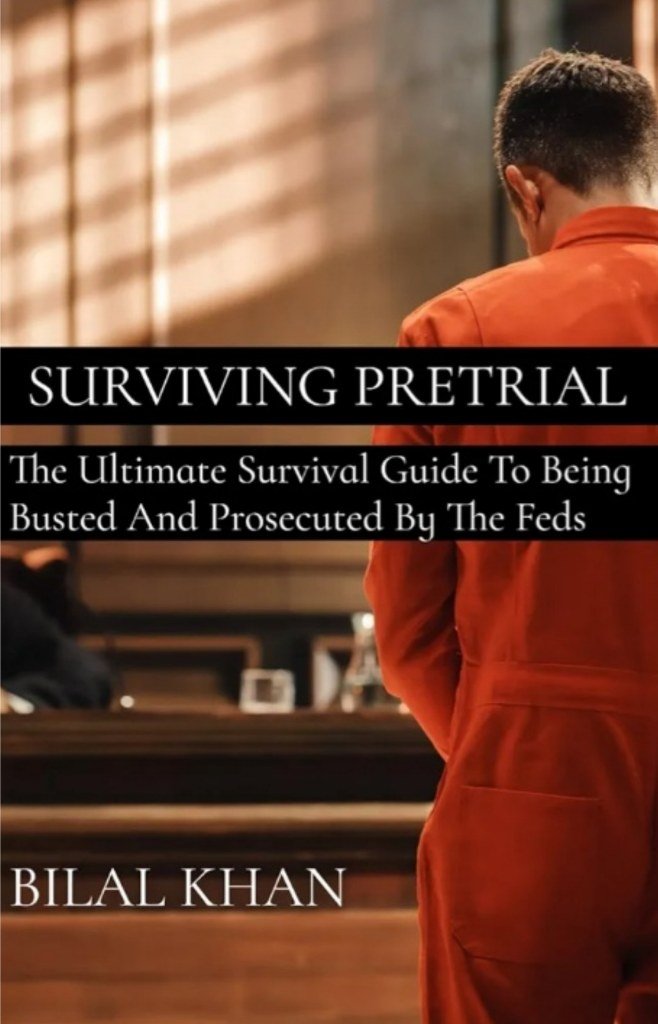
Surviving Pretrial book cover by Bilal Khan

Surviving Pretrial

The Ultimate Survival Guide to Being Busted & Prosecuted by the Feds

The moment federal charges land, everything changes overnight — and the pretrial phase quietly decides much of what follows. This is the guide written for the family at the kitchen table and the defendant in the holding cell: how to evaluate your attorney, what detention and bond really look like, how federal charges differ from state, what never to say on a recorded call, and how cooperation and plea deals actually work. No legalese. No false hope. Just the truth.

Available in paperback.

The blade of prosecutorial power is only sharpened through ignorance.

When I fell, there wasn't much out there. Busted by the Feds — written by Larry Fassler — was one of the only resources a defendant or their family could actually find. He understood what this felt like from the inside. He saw the gap and filled it. His book was excellent at showing how the sentencing guidelines actually worked, and the anecdotes throughout gave me something real to learn from when I had almost nothing else. I used it. I'm grateful it existed.

Larry Fassler passed away. From what I understand, the book hasn't been updated since. The system he wrote about — the guidelines, the procedures, the policies — kept moving without him. That's not a criticism of his work. It's the nature of the thing he was trying to document.

Surviving Pretrial is not a replacement. It's a continuation.

What I felt was missing.

Busted covered finding a lawyer. What it didn't cover — what nobody covered — was what to do when your lawyer turns on you.

My original attorneys and I had a falling out. A serious one. The U.S. Marshals had to physically separate us. And then came the threat: if you don't do what we tell you, we are withdrawing.

I thought that meant I would be standing in that courtroom alone. So I shut up. I became a beaten dog — complying, saying nothing, going along. I did not know I had another option.

My mother intervened. She found new attorneys. And it was through them that I learned something no one had ever told me: I could have walked into that courtroom at any point and petitioned the judge to relieve my attorneys and appoint a public defender. That's not a loophole. That's a right — a documented, available, procedural right — and I did not know it existed.

Nobody should ever have to suffer that fear in silence. That chapter is in this book.

The discovery trick.

My original lawyers came to visit me and brought boxes. Not folders. Eight full cases of paper — stacked up, overwhelming. They told me it was all my discovery.

My new attorneys explained what had actually happened: nobody prints computer dumps. That's the only way you arrive at that volume. The substantive discovery — what actually mattered — while still significant, fit into two large three-ring binders. That's it. Two binders. Not eight cases.

They buried me in paper so I would feel the weight of it. So I would believe the evidence was insurmountable. So I would comply.

The blade.

The first time you stand before a federal judge, the bench is so far away and so high up that you feel like you are standing in judgment before God. That feeling is not an accident. It is the architecture.

The blade of prosecutorial power is only sharpened through ignorance — through defendants who don't know their rights, who don't understand criminal procedure, who have no idea what their attorney is supposed to be doing. Every right you learn dulls that blade. Every strategy you understand forces your attorney to actually do the work. They cannot fake it when you know what they are supposed to be doing.

That is what this book is. Not legal advice. Information — the kind that prosecutors and their system pray you never find.

Busted by the Feds currently runs $150 to $200 on Amazon. Sometimes more, for a used copy.

Surviving Pretrial is $74.95.

I spent four and a half years in pretrial detention. I know what it costs — financially and every other way — to fight a federal case. I priced this book so that cost wouldn't be one more thing standing between a family and the information they need.

★★★★★

Much Better Than Busted By the Feds

"I've ordered both this title and the Busted By the Feds title for my son who was targeted by the government and is in detention as I write this. He and all those in the detention center have told me that Surviving Pretrial is more detailed, more updated, and more usable against persecution in today's environment. The book contains a plethora of information and advice from an author who clearly knows the subject matter. Thanks for a great book."

— Kevin Sr., Verified Purchase · Amazon, February 6, 2023

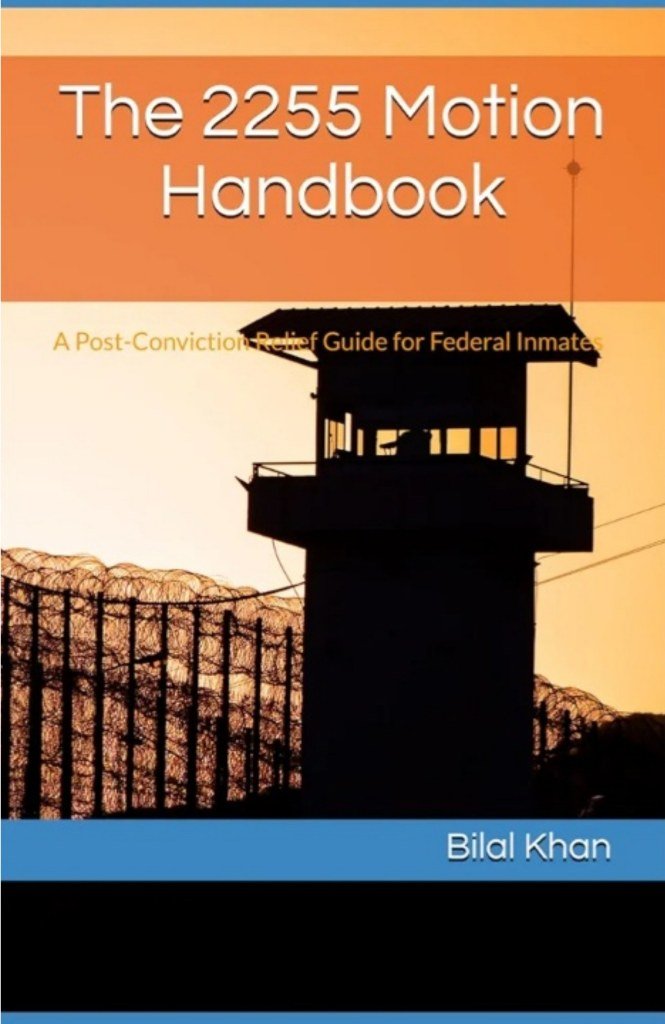
The 2255 Motion Handbook book cover by Bilal Khan

The 2255 Motion Handbook

A Post-Conviction Relief Guide for Federal Inmates

Conviction is not the end of the fight. A 28 U.S.C. § 2255 motion is one of the most powerful — and most misunderstood — tools a federal inmate has. The first guide of its kind, this handbook walks you through the exact steps to file, argue, and fight for your freedom: grounds for relief, deadlines that can sink a case, ineffective-assistance claims, and how to give your motion its best possible shot. Written so a non-lawyer can actually use it.

Available in paperback.

One year. From the moment your conviction becomes final.
Do you know when that is?

One year. That is the window under 28 U.S.C. § 2255. One year from the moment your conviction becomes "final" to file your motion for post-conviction relief.

But what does final mean? Most people assume it means the day they were sentenced. It doesn't. If you appealed, "final" is the day the Supreme Court denies certiorari — or the day the window to seek cert closes, which is 90 days after your court of appeals issues its decision. If you didn't appeal, the calculation is different again. This single question has cost people their only shot before they ever got started.

What I learned by losing.

By the time I reached federal prison, I had already been litigating issues in court for years. I thought I understood enough to pursue post-conviction relief on my own. I worked hard on it — brought detailed claims, well-researched, organized. Filed.

And lost. Looking back, it was unsurprising.

It took months to understand my biggest mistake: I had put too much in. Too many claims. I had one extremely strong argument buried in the pile — one that may have actually moved a judge. But the kitchen sink approach never works. The judge sees volume, not clarity. After years of helping others navigate post-conviction and reading books like the Rule 32 Handbook, I understand now what good lawyers have always known: they won't file every argument you give them. Not because they're lazy. Because they know that throwing everything at the wall signals you have nothing worth throwing.

The lesson wasn't a resource on what grounds to raise. It was a collateral state case I was fighting in Arizona. I needed to file under Rule 32, and I found a book called the Rule 32 Handbook by Cedric Hopkins. That book did something I hadn't seen anywhere for federal § 2255 relief: it explained the actual procedure, step by step, in plain language. Discipline. Focus. One strong claim presented clearly beats ten weak ones every time.

What's missing from every other book.

There is no shortage of resources on what claims to raise in a § 2255 — ineffective assistance, Brady violations, newly discovered evidence. Most of it is written in language a lawyer might recognize but a prisoner in a law library, alone, would not easily parse. And as far as I could find when I looked, none of them explained in plain language how to actually file one.

That's not an accident.

Whether the book is written by a lawyer or an inmate, there is a financial incentive to keep you confused about the process. Lawyers want to write your petition for you. Jailhouse lawyers want the same. Very few will be honest with you about your actual odds. Fewer still will tell you outright: don't waste your money on this one. And the jailhouse lawyer community — in many cases, they are worse than snake oil salesmen.

Why this book exists.

Anyone can file a § 2255 petition. If you take the time to understand the actual procedure, you will find it is not rocket science. The process is navigable. The deadlines are strict but knowable. The forms are straightforward when you know what you're doing.

There is one attorney I would recommend without hesitation if you are serious about post-conviction relief: Doug Passon. He will be straight with you about your case — including whether you should file at all. That kind of candor is rare in this field.

But whether you hire Doug, retain anyone else, or file on your own: read this first. It is what ensures you know what is happening — and what your attorney is, or is not, doing on your behalf.

★★★★★

Great Info. VERY helpful.

"This book really answered all of our questions on how to keep fighting after the case ended. Just like his first book, Khan provides information from a very helpful perspective: someone who has been there. If you are going to be claiming ineffective assistance of counsel then you need this book before you file."

— Jason, Verified Purchase · Amazon, April 28, 2025

These books are educational resources written from personal experience. They are not legal advice and do not create an attorney-client relationship. Always consult a licensed attorney about your specific case.

The Series

Read the whole series.

Browse every Surviving the Feds title on Amazon.